
Plant Health Care for Trees in Charleston, WV
Patriot Tree Experts provides plant health care for trees in Charleston, WV and nearby communities. We help property owners investigate tree stress, thinning canopies, early leaf drop, pest activity, disease concerns, root-zone problems, soil issues, and other signs that a tree may be declining. The goal is to understand what is affecting the tree and choose the most practical next step before problems become more serious.
🎖️ Veteran-Owned & Operated
🌳 Fully Insured Tree Service
🌿 Plant Health Care
🪚Located in Charleston, WV
Tree Health Problems Are Easier to Address Early
Trees can decline for many reasons, and the visible symptoms do not always reveal the underlying cause. Compacted soil, root damage, drainage problems, drought stress, construction disturbance, pests, disease pressure, storm damage, or poor growing conditions can all affect tree health. Our plant health care service looks at the tree and the surrounding site together so recommendations are based on the actual conditions around your property.
If a tree is thinning, dropping leaves early, developing dead branches, showing unusual growth, or simply looks different from previous seasons, a tree inspection and health assessment can help clarify the concern and next step. Selected branch problems may call for deadwood pruning; other findings may lead to site care, targeted treatment, monitoring or removal. Tell us when the change began and whether it followed a storm, digging or another change near the tree.
Plant Health Care Services We Provide
Plant health care is not one single treatment. It is a process of identifying visible stress factors, checking site conditions, and matching the response to the tree. Patriot Tree Experts provides tree-focused care for Charleston-area properties where health, structure, soil, pests, disease concerns, or long-term preservation are the priority.
Tree Health Assessments
We inspect visible symptoms such as thinning foliage, dead branches, discoloration, unusual leaf drop, bark changes, fungal growth, pest activity, and other signs of decline.
Root-Zone and Soil Evaluation
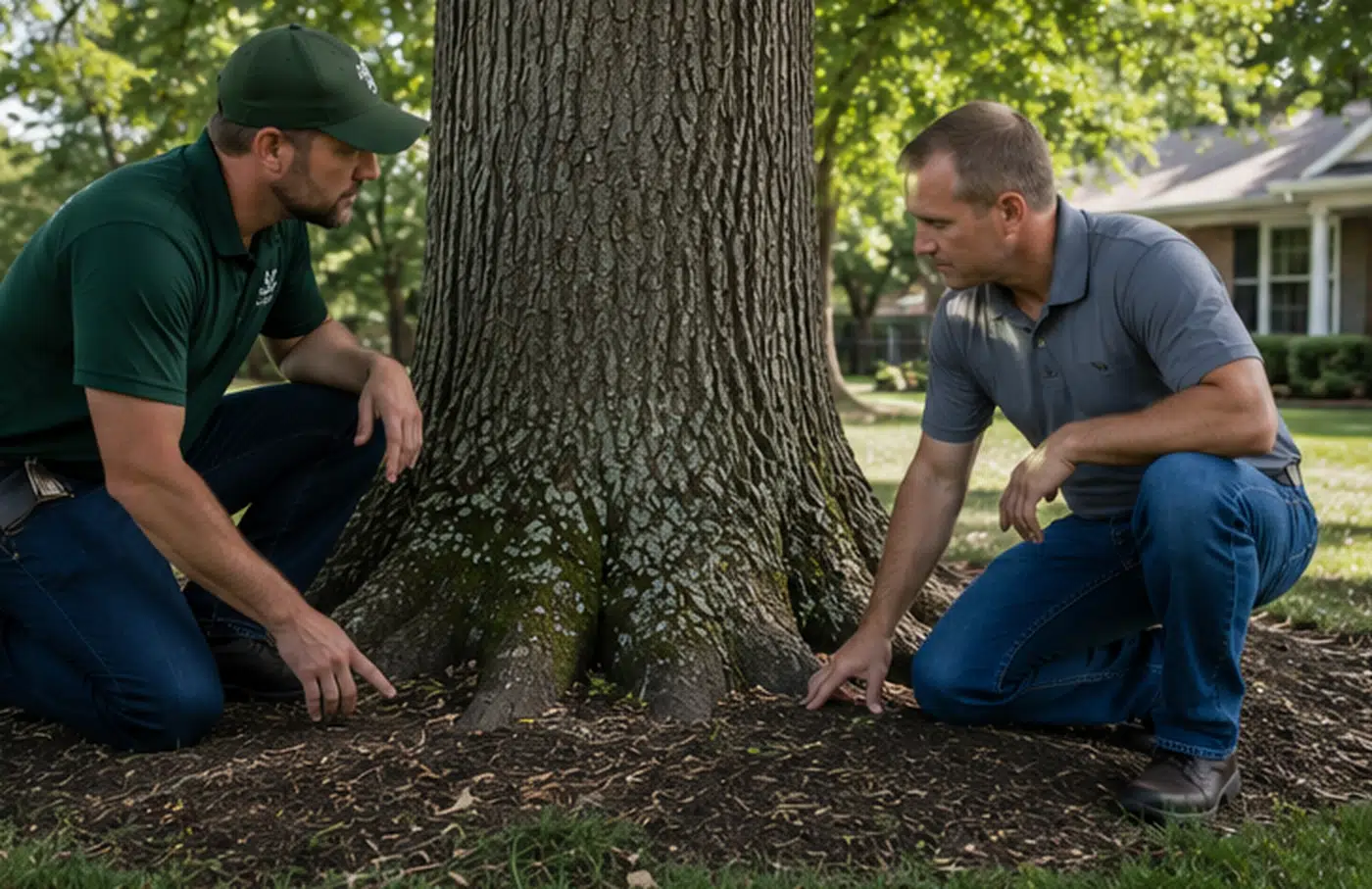
We look at drainage, compaction, grade changes and visible root damage. Tell us about recent construction or changes to the yard. A soil or site concern needs evaluation before choosing a treatment.
Pest and Disease Concern Review
When insects, fungal symptoms, cankers, unusual spotting, dieback, or other concerns are visible, we can evaluate the tree and help determine whether treatment, monitoring, pruning, or another service makes sense.
Storm and Environmental Stress
Heavy wind, saturated soil, drought, heat, snow, ice, and repeated storm exposure can weaken trees over time. We look for damage and stress that may not be obvious immediately after the weather event.
Soil and Tree Injection Recommendations
Our plant health care work is focused on keeping valuable trees healthy, identifying problems early, and choosing treatments based on the condition of the individual tree. That can include checking canopy density, leaf color, branch dieback, bark and trunk condition, visible decay, pest or disease symptoms, root-zone stress, soil conditions, and changes that may develop from one season to the next.
For trees that need ongoing attention, our tree inspection and health assessment service can establish a starting point for recurring visits. We can track visible changes in canopy density, leaf color, branch dieback and root-zone conditions, then review whether the care plan needs adjustment. When treatment is appropriate, targeted soil or trunk treatments may be part of that plan. Learn more about our soil and tree injection services, including treatments that may be used as part of a longer-term tree care program.
Pruning and Structural Care
Deadwood, damaged limbs, crossing branches, poor clearance, and structural problems can place additional stress on a tree. Proper pruning may be part of a broader plant health care plan when the tree can reasonably be preserved.
Not Sure Why Your Tree Is Declining?
Many tree problems look similar from the ground. Patriot Tree Experts can evaluate the tree, site conditions, visible symptoms, and surrounding property and explain whether plant health care, pruning, cabling and bracing, soil and tree injections, removal, or continued monitoring is the most practical next step.
Signs Your Tree May Need Plant Health Care
Call for a tree health evaluation when a tree changes noticeably, appears stressed, or begins showing symptoms that were not present in previous seasons. Early evaluation can help separate temporary stress from problems that may continue to worsen.
✓ Leaves are thinning, browning, curling, spotting, or dropping early
✓ Branch tips are dying back or deadwood is increasing
✓ The canopy looks sparse compared with previous years
✓ There are holes, insects, unusual bark changes, fungi, or cankers
✓ Roots are exposed, damaged, buried, compacted, or affected by construction
✓ The soil stays excessively wet or becomes extremely dry
✓ A tree has been stressed by storms, excavation, grading, or nearby construction
✓ Growth has slowed or the tree appears weak despite normal seasonal conditions
Our Plant Health Care Process
Tell us when symptoms began, whether the change affects one tree or several, and about recent digging, grading, drainage changes or treatments. That history helps us evaluate the tree and site before discussing care, further assessment or monitoring.
1. Inspect the Tree and Site
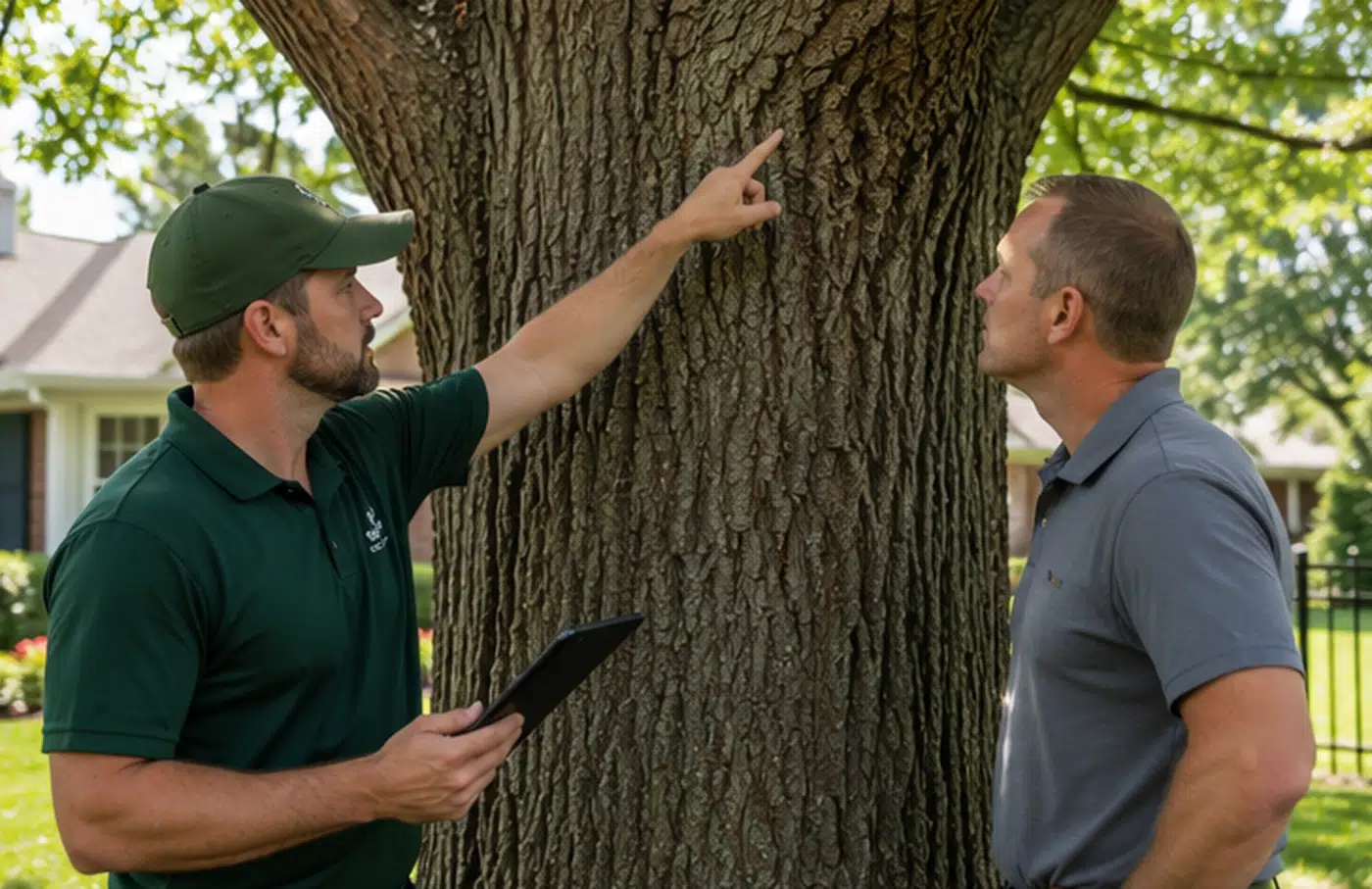
We look at the canopy, trunk, limbs, root zone, soil conditions, drainage, nearby construction, access, and surrounding structures to understand the tree’s growing environment.
2. Identify Visible Stress Factors
We check for signs of pest activity, disease concerns, decay, root-zone stress, soil problems, storm damage, deadwood, and other visible issues that may be contributing to decline.
3. Recommend the Right Next Step
Depending on the tree, recommendations may include monitoring, pruning, soil and root-zone improvements, soil and tree injections, cabling and bracing, or removal when a tree is too damaged or hazardous to preserve safely.
4. Plan Follow-Up Care
Before starting care, agree on the work included, what changes to watch for and when to reassess. Recurring visits or additional treatments should be discussed explicitly rather than assumed to be included in the first estimate.
Tree Health, Support, and Preservation Options
Plant health care often works best when it is coordinated with other tree services. A stressed tree may need pruning, support, soil treatment, targeted injections, or simply monitoring. The right choice depends on the tree’s condition, structure, location, and the risks around it.
Arborist Services
When the main question is whether a tree is safe, structurally sound, or worth preserving, an arborist-style evaluation can help clarify the condition of the tree and the available options.
Cabling and Bracing
Mature trees with weak unions, heavy limbs, or structural concerns may benefit from support systems when preservation is reasonable. Cabling and bracing can be part of a broader tree-care plan.
Soil and Tree Injections
Targeted soil and tree injections may be considered when nutrient problems, pest concerns, disease pressure, or root-zone stress are affecting a tree. Treatment should match the actual problem rather than be applied automatically.
Plant Health Care in Charleston and Nearby Communities
Patriot Tree Experts provides plant health care for trees throughout Charleston, Kanawha County, and nearby Putnam County communities. We help property owners evaluate stressed, declining, damaged, or unhealthy trees and choose practical next steps for long-term tree care.
Don’t see your area listed? Call Patriot Tree Experts to ask about plant health care and tree-health services near you.

Helpful Tree Health Topics
Tree health problems often overlap with structure, pruning, storm damage, and removal decisions. These related services can help you understand the best next step for your property.
Related guides: When Cabling and Bracing Can Help Preserve a Mature Tree · 7 Signs a Tree May Be Hazardous Before the Next Storm
When Is Tree Removal the Safer Choice?
Some declining trees can be preserved, while others may be too damaged, decayed, unstable, or hazardous to keep safely. Removal may be the better option when the risk cannot be reasonably reduced.
Can Pruning Improve Tree Health?
Removing deadwood, damaged limbs, crowded growth, or storm-broken branches can improve clearance and reduce unnecessary stress when pruning is appropriate for the tree.
Storm Damage or Urgent Safety Concern?
If a tree has split, fallen, dropped large limbs, or created an immediate hazard, emergency tree service may be needed before routine plant health care can be considered.
Plant Health Care FAQs
Have questions about plant health care for trees in Charleston, WV? Here are answers to common questions from local property owners.
Tell us when the symptoms began, whether one tree or several are affected, and what changed around the property. Mention recent digging, drainage changes, storm damage and previous treatments. Photos taken from a safe location can help explain the concern before a tree inspection and health assessment. Explain any testing or written-report requirement in advance so we can confirm the available service and scope.
Selected dead or damaged branches may need attention, but pruning is not a substitute for understanding why the tree is declining. Discuss deadwood removal together with the tree-health evaluation. A hanging limb or sudden structural change needs a separate urgency assessment; keep clear and call about emergency tree service rather than waiting for a routine appointment.
Ask which concern the proposed work addresses, whether further assessment is needed, and how progress will be reviewed. Separate the scope for pruning, site care, any recommended treatment and follow-up visits. Soil and tree injections should be discussed as a specific option when appropriate, not an automatic package for every unhealthy tree. Confirm the price and any separately charged follow-up before authorizing work.
Plant health care is a tree-focused approach to identifying stress, pests, disease concerns, soil and root-zone problems, structural issues, and other factors that can affect long-term tree health. The recommended care depends on the tree and site conditions.
Common warning signs include thinning foliage, early leaf drop, dead branches, discoloration, unusual bark changes, fungal growth, insect activity, slow growth, canopy dieback, or visible root-zone damage.
Yes. Compacted soil, poor drainage, buried roots, construction disturbance, erosion, and root damage can all place trees under stress and contribute to decline.
No. Some trees need monitoring or selective pruning, while others may benefit from a treatment directed at an identified concern. Ask what problem the proposed work addresses and what alternatives are available. A severely compromised tree may require tree removal rather than treatment. We discuss the tree and site conditions before recommending a scope, without assuming that every symptom calls for an injection.
Sometimes. The outcome depends on the underlying problem, how advanced the decline is, the tree species, site conditions, and whether the main stress factor can be corrected or managed. No treatment can guarantee that every declining tree will recover.
Yes. Patriot Tree Experts provides tree-health evaluations and plant health care services in Charleston, WV and nearby communities. Call to discuss the symptoms you are seeing and schedule an evaluation.
Schedule a Tree Health Evaluation in Charleston, WV
If a tree is thinning, declining, showing unusual leaf or bark symptoms, developing dead branches, or has been stressed by pests, disease concerns, storms, soil problems, construction, or root damage, Patriot Tree Experts can help evaluate the situation and explain the most practical next step. Call today to schedule a tree health evaluation in Charleston, WV.