Soil and Tree Injections in Charleston, WV
Patriot Tree Experts provides soil and tree injection services in Charleston, WV as part of a broader tree-health approach. Targeted treatments may be considered when a tree is affected by nutrient deficiencies, pest pressure, disease concerns, root-zone stress, or other problems that are better addressed through the soil or directly within the tree rather than with broad surface applications.
Targeted Tree Treatments Start With the Right Diagnosis
Tree injections and soil treatments should not be applied simply because a tree looks unhealthy. Similar symptoms can come from very different causes, including root damage, poor drainage, compacted soil, environmental stress, pest activity, disease pressure, or structural problems. We start with the tree and site conditions so treatment is matched to the actual concern. A tree inspection and health assessment helps establish the questions to investigate. Share previous treatment records and changes around the roots, then discuss how any recommended work fits the broader plant health care plan.
When injections are appropriate, they can deliver treatment where it is needed while limiting unnecessary application to surrounding areas. In other cases, pruning, root-zone care, monitoring, or removal may be the better choice.
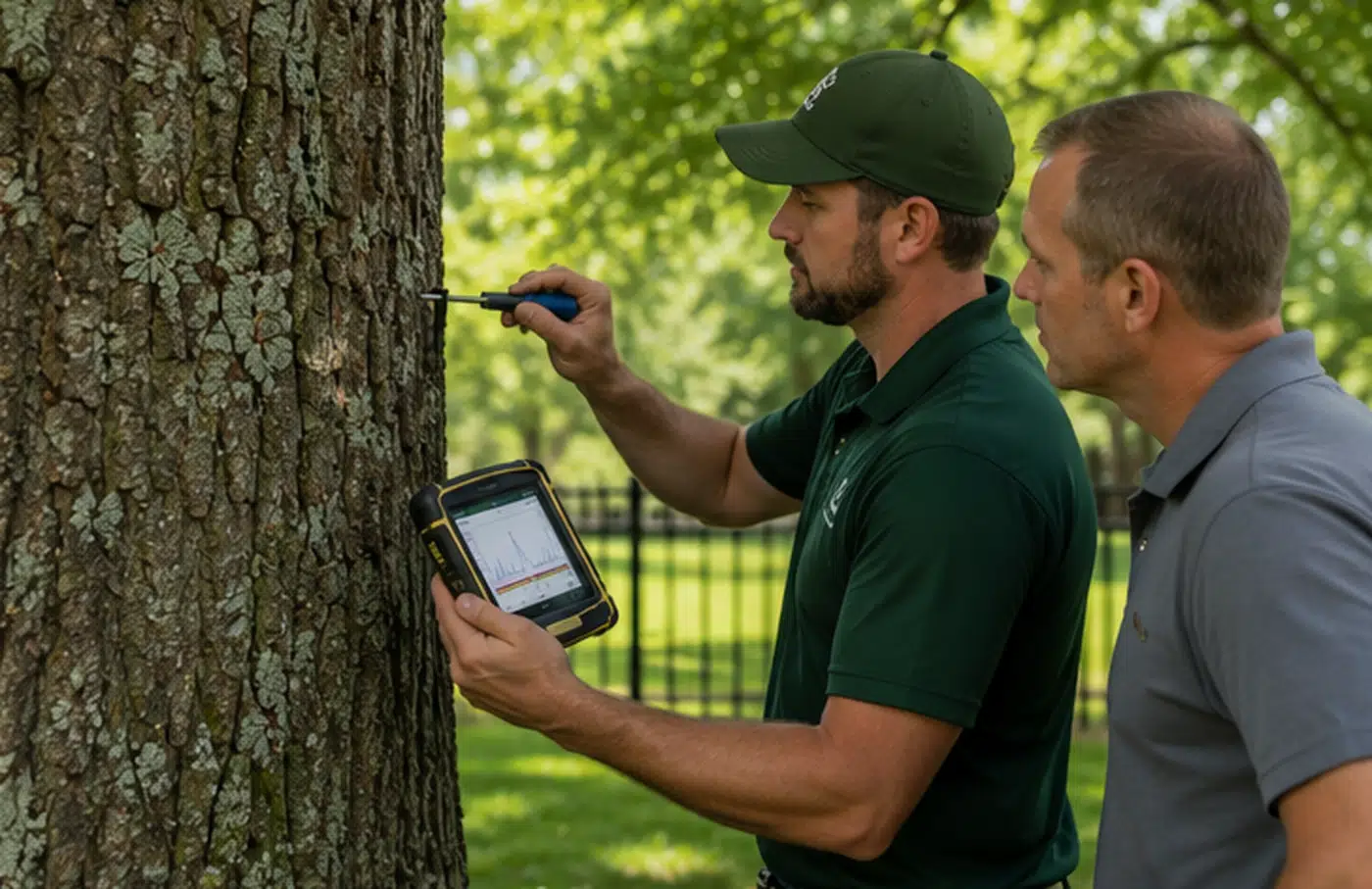
Soil and Tree Injection Services
Patriot Tree Experts uses targeted treatment as one tool within plant health care. The exact recommendation depends on the tree, visible symptoms, site conditions, and the problem being addressed.
Tree Health Treatment Evaluations
We evaluate visible symptoms, canopy condition, trunk and bark changes, root-zone stress, and site conditions before recommending any treatment.
Soil and Root-Zone Treatments
When the root zone is part of the problem, soil-applied treatments may be considered to support nutrient availability or address certain tree-health concerns.
Tree Injection Treatments
Direct tree injections may be considered for selected pest, disease, or nutrient-related concerns when that method is appropriate for the tree and the treatment plan.
Follow-Up Monitoring
Treatment response can take time and varies by tree and condition. Follow-up observation helps determine whether symptoms are stabilizing, improving, or continuing to decline.
Treatment Combined With Pruning
Deadwood, damaged limbs, or poor structure may still need to be addressed even when a tree receives treatment. Pruning and plant health care often work together when preservation is the goal.
Treatment as Part of Plant Health Care
Injections are not a complete tree-care plan by themselves. Soil conditions, root health, watering, pruning, structural support, and monitoring may all matter depending on why the tree is declining.
Not Sure Whether Your Tree Needs Treatment?
Patriot Tree Experts can evaluate the tree and explain whether soil or tree injections, plant health care, pruning, cabling and bracing, monitoring, or removal should be considered. We do not recommend treatment just because a tree shows stress; the first step is understanding the likely cause.
When Soil or Tree Injections May Be Considered
Targeted treatment may make sense when a tree has a specific health concern that can reasonably be addressed through soil treatment or direct injection. The decision should be based on the tree’s condition and the likely cause of the symptoms.
✓ A tree is showing persistent decline or canopy thinning
✓ Pest activity is visible or strongly suspected
✓ Disease symptoms are present and treatment may be appropriate
✓ Soil or nutrient conditions may be contributing to stress
✓ Surface treatment is impractical or undesirable around the property
✓ A mature tree is worth preserving when a targeted treatment option exists
✓ Root-zone conditions are being addressed as part of a larger care plan
✓ Follow-up monitoring is available to evaluate the response
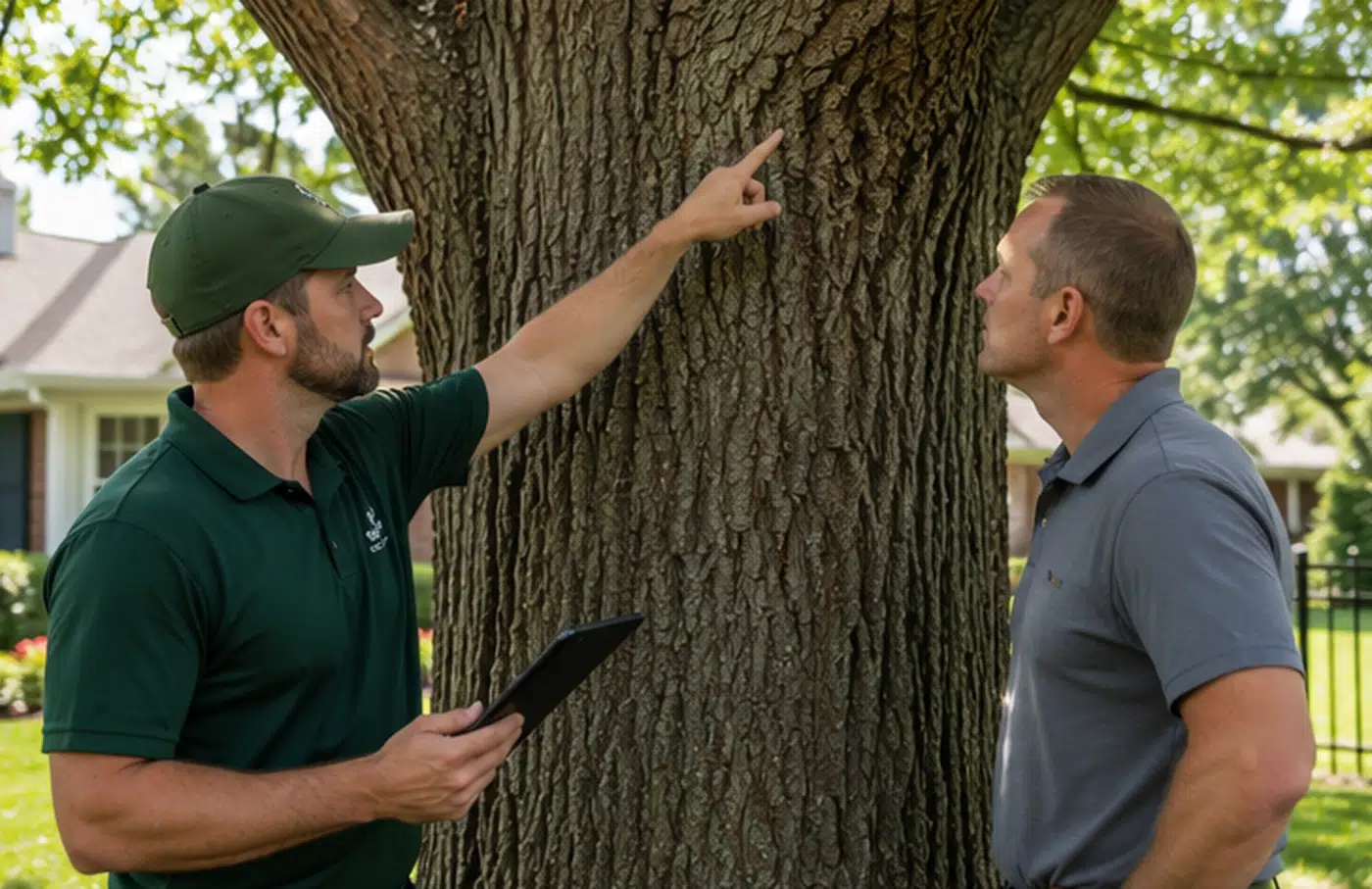
Our Soil and Tree Injection Process
We use a simple process: inspect the tree, identify the likely concern, determine whether injection is appropriate, and explain what follow-up is needed.
1. Evaluate the Tree and Site
We look at the canopy, trunk, bark, visible symptoms, root zone, soil conditions, drainage, recent construction, and other site factors that may be affecting the tree.
2. Identify the Likely Cause
We separate likely pest, disease, nutrient, soil, root-zone, environmental, and structural concerns so treatment is not used for a problem it cannot solve.
3. Choose the Appropriate Treatment
If treatment is appropriate, we determine whether soil application, tree injection, pruning, or another tree-care step makes the most sense for the situation.
4. Monitor the Tree
We discuss the expected response, what symptoms to watch, and when to reassess the tree. Ask what the treatment is intended to address and whether follow-up visits are included. Continued decline calls for review of the cause and care plan, not an assumption that more treatment will solve it.
Related Tree Health Services
Soil and tree injections are often part of a broader plan. The same tree may also need plant health care, pruning, structural support, or an arborist-style evaluation depending on the issue.
Plant Health Care
Plant health care looks at the whole tree and growing environment, including stress, pests, disease concerns, soil conditions, roots, and long-term care needs.
Arborist Services
A tree inspection and health assessment helps determine whether treatment, pruning, structural support, monitoring or removal is the appropriate next step. Share when symptoms began and any recent changes around the roots; a stressed appearance alone does not establish that injections are needed.
Tree Trimming and Pruning
When deadwood, damaged limbs, or crowded growth are adding stress, pruning may be recommended alongside tree-health treatment.
Soil and Tree Injections in Charleston and Nearby Communities
Patriot Tree Experts provides soil and tree injection evaluations throughout Charleston, Kanawha County, and nearby Putnam County communities as part of our tree-health and plant health care services.
Don’t see your area listed? Call Patriot Tree Experts to ask about soil and tree injection service near you.

Helpful Tree Treatment Topics
Tree treatment decisions often overlap with plant health care, pruning, structural evaluation, and removal. These related services can help you understand the best next step.
When Is Removal the Better Option?
Treatment cannot restore every tree. Severe decay, advanced decline, major structural failure, or extensive root damage may make removal the safer and more practical choice.
Can Pruning Help a Treated Tree?
Sometimes. Removing deadwood, storm-damaged limbs, or unnecessary weight can reduce stress and improve safety while other tree-health concerns are being addressed.
Is This an Emergency Instead?
If a tree has split, fallen, dropped a large limb, or created an immediate hazard, emergency tree service should be addressed before routine treatment.
Soil and Tree Injection FAQs
Have questions about soil and tree injections in Charleston, WV? Here are answers to common questions from local property owners.
Ask which problem is being addressed, why the proposed treatment suits that tree, and what outcome can reasonably be monitored. Confirm whether the price includes the initial tree-health assessment, treatment and any follow-up. A treatment proposal should explain its limits and any other work needed; it should not promise to cure every cause of decline.
Yes. Provide available treatment dates, product records and the symptoms that prompted earlier work. Mention digging, paving, changes to soil levels and drainage near the tree. This history helps inform the plant health care plan rather than repeating a treatment without reviewing what has changed. Do not apply another product just to prepare for our visit.
No automatic repeat schedule fits every tree or concern. Ask how the response will be reviewed, what conditions would justify further treatment, and whether follow-up visits are included in the quote. Ongoing arborist-focused tree care may involve monitoring or other work instead. Additional treatment should follow a current assessment and applicable product directions, not simply the arrival of another season.
They are targeted methods of delivering treatment through the soil or directly into a tree. They may be used for selected nutrient, pest, disease, or tree-health concerns when that method is appropriate.
No. Similar symptoms can have different causes, so start with a tree inspection and health assessment rather than choosing a treatment from appearance alone. The next step may be pruning, site care, monitoring or removal. Any injection should address a specific concern within the broader plant health care plan, with its purpose, limits and follow-up explained.
Response time varies depending on the tree, the condition being treated, the season, and how advanced the problem is. Some changes may take time and no treatment can guarantee recovery.
They can be an option for certain pest or disease concerns, but the tree should be evaluated first to determine whether injection is appropriate and whether other site or structural problems are also contributing.
Yes. Soil and root-zone treatments can be part of a broader plant health care plan when soil conditions, nutrients, or root-zone stress are affecting tree health.
Yes. Patriot Tree Experts provides soil and tree injection evaluations in Charleston, WV and nearby communities as part of our tree-health services.
Schedule a Tree Treatment Evaluation in Charleston, WV
If a tree is declining or showing symptoms that may be related to pests, disease concerns, nutrients, soil conditions, or root-zone stress, Patriot Tree Experts can evaluate the situation and explain whether soil treatment, tree injection, pruning, plant health care, monitoring, or removal should be considered. Call today to schedule an evaluation.