
Tree Cabling and Bracing in Charleston, WV
Patriot Tree Experts provides tree cabling and bracing in Charleston, WV for mature trees with weak branch unions, heavy limbs, split leaders, or structural concerns that may benefit from additional support. Cabling and bracing are considered only after a tree inspection. We assess the structural concern, overall tree condition and nearby structures before recommending support, pruning or removal. A support system does not make a damaged tree failure-proof.
🎖️ Veteran-Owned & Operated
🌳 Fully Insured Tree Service
🪢 Cabling & Bracing
🪚Located in Charleston, WV
When a Mature Tree Needs Structural Support
Some trees develop structural weaknesses as they grow. Co-dominant stems, included bark, heavy horizontal limbs, old storm damage, previous pruning wounds, or a developing split can place extra stress on a tree. In certain cases, support systems can reduce movement and help protect vulnerable unions or limbs.
Before recommending cabling or bracing, we look at the tree’s condition, structure, size, location, surrounding targets, and whether preservation is realistic. Trees with severe decay, major root failure, or extensive structural damage may be better candidates for pruning or removal instead.
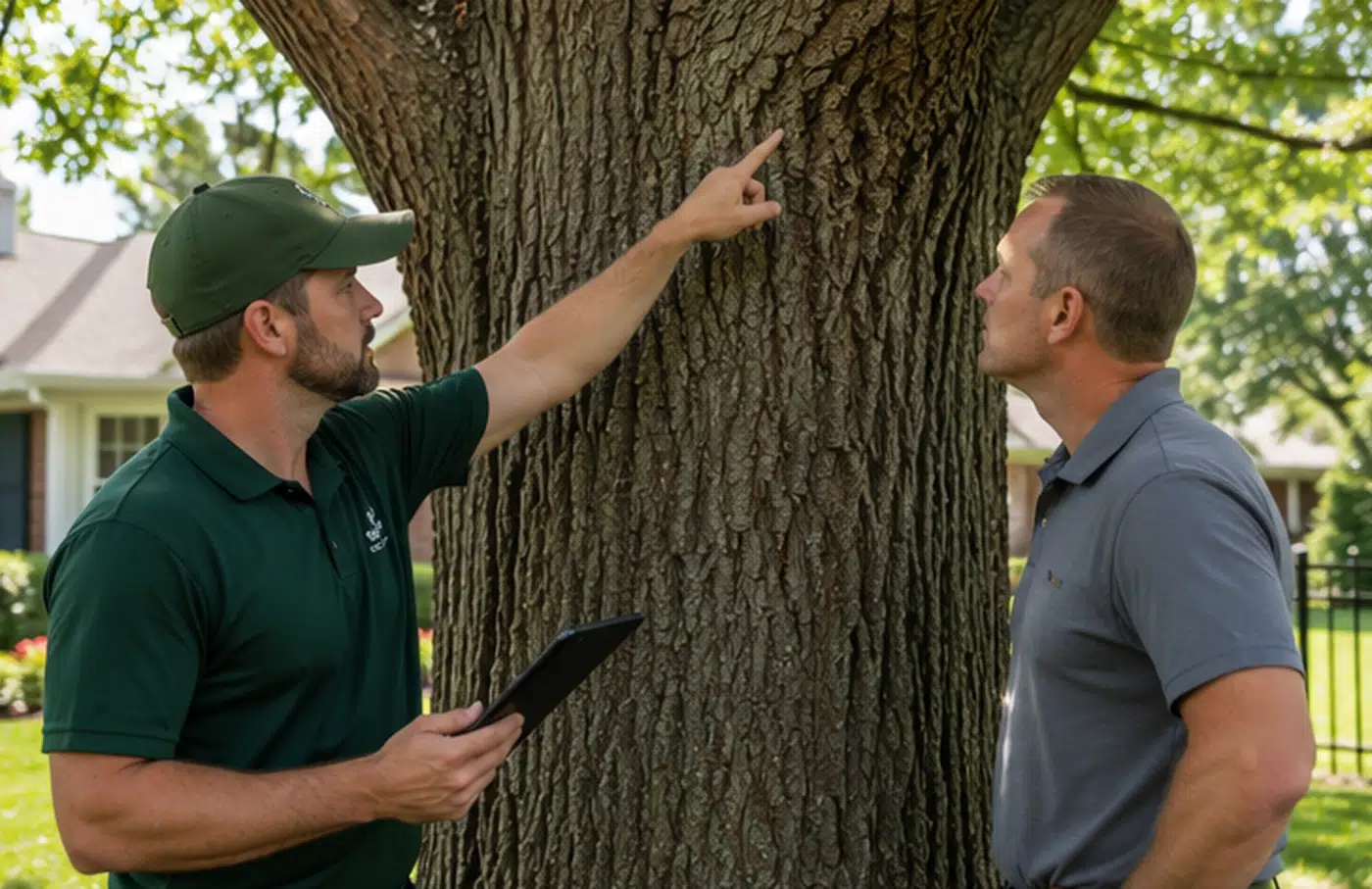
Tree Support Services We Provide
We evaluate the tree before recommending structural support. A clear proposal should identify the tree or union involved, whether pruning is included, equipment access and follow-up inspections. Cabling and bracing are not suitable for every damaged tree.
Cabling for Weak or Heavy Limbs
Cables can help reduce excessive movement between stems or support large limbs that place significant leverage on a weak attachment point.
Bracing for Split or Weak Unions
Bracing may be considered where trunks or major leaders have begun to separate or where a vulnerable union needs rigid support as part of a larger preservation plan.
Mature Tree Preservation Evaluations
When a valuable mature tree has a structural concern, we can evaluate whether support, selective pruning, monitoring, or removal is the most practical option. Our guide on when tree cabling and bracing can help preserve a mature tree explains the situations where structural support may be worth considering.
Storm-Damaged Tree Support
Storms can expose weak unions, cracked leaders, or heavy limbs that were already under stress. We can inspect visible damage and determine whether support, pruning, emergency work, or removal should be considered.
Support Combined With Pruning
Cabling or bracing may work best when paired with selective pruning that reduces weight or improves clearance around a vulnerable part of the tree.
Ongoing Inspection and Monitoring
Trees keep growing after support is installed. Ask when the tree and hardware should be inspected again and whether those visits are included. Report new damage from the ground. Do not climb or adjust the system yourself.
Not Sure Whether Cabling Is the Right Choice?
Tell us when the defect appeared, whether the tree already has cables or rods, and about earlier storm damage or pruning. We can compare support, pruning, monitoring and removal for that tree. The recommendation depends on the tree’s condition, the severity of the defect, and what could be damaged if the tree or limb failed.
Signs a Tree May Need Structural Support
Call for an evaluation when a mature tree has a visible split, weak union, very heavy limb, multiple leaders pulling apart, or a structural concern that appears to be worsening. Early inspection can help determine whether preservation is realistic.
✓ A trunk or major union is beginning to split
✓ Two large leaders are pulling away from each other
✓ A heavy horizontal limb has a weak attachment point
✓ Old storm damage has weakened part of the canopy
✓ Cracks are visible where large stems join
✓ A mature tree has significant value and preservation is preferred
✓ Limbs extend over a home, driveway, road, or other important target
✓ Previous pruning or damage has changed the tree’s weight distribution

Our Cabling and Bracing Process
We start by evaluating the tree before deciding whether support is appropriate. The goal is to understand the structural problem, determine what can reasonably be preserved, and avoid installing support on a tree that is already too compromised.
1. Inspect the Tree and Surroundings
We look at the trunk, major unions, limbs, canopy weight, visible defects, root zone, site conditions, and what structures or areas could be affected by failure.
2. Identify the Structural Concern
We determine whether the main issue is a weak union, split leader, heavy limb, storm damage, poor attachment, or another structural problem.
3. Decide Whether Support Is Appropriate
If the tree is a reasonable candidate for preservation, we may recommend cabling, bracing, selective pruning, or a combination. If the tree is too decayed or unstable, removal may be the safer option.
4. Plan Follow-Up Inspection
Trees and support systems need follow-up as conditions change. Our tree inspection and health assessment service can help review the tree and its support over time. We discuss changes to watch for and when another inspection is appropriate; cabling is not a guarantee against failure.
Related Tree Preservation Options
Cabling and bracing are often only one part of a larger tree-care plan. Depending on the tree, pruning, plant health care, soil treatment, or removal may also need to be considered.
Arborist Services
An arborist-style evaluation can help clarify whether a structural defect is manageable and whether support, pruning, monitoring, or removal is the better choice.
Plant Health Care
A structurally weak tree may also be under stress from root-zone problems, pests, disease concerns, or poor growing conditions. Plant health care can address the health side of the problem.
Tree Trimming and Pruning
Selective pruning can reduce deadwood, improve clearance, and sometimes reduce weight on a vulnerable limb or union. Pruning may be recommended before or together with structural support.
Tree Cabling and Bracing in Charleston and Nearby Communities
Patriot Tree Experts provides tree cabling and bracing evaluations throughout Charleston, Kanawha County, and nearby Putnam County communities for mature trees with structural concerns.
Don’t see your area listed? Call Patriot Tree Experts to ask about tree cabling and bracing service near you.
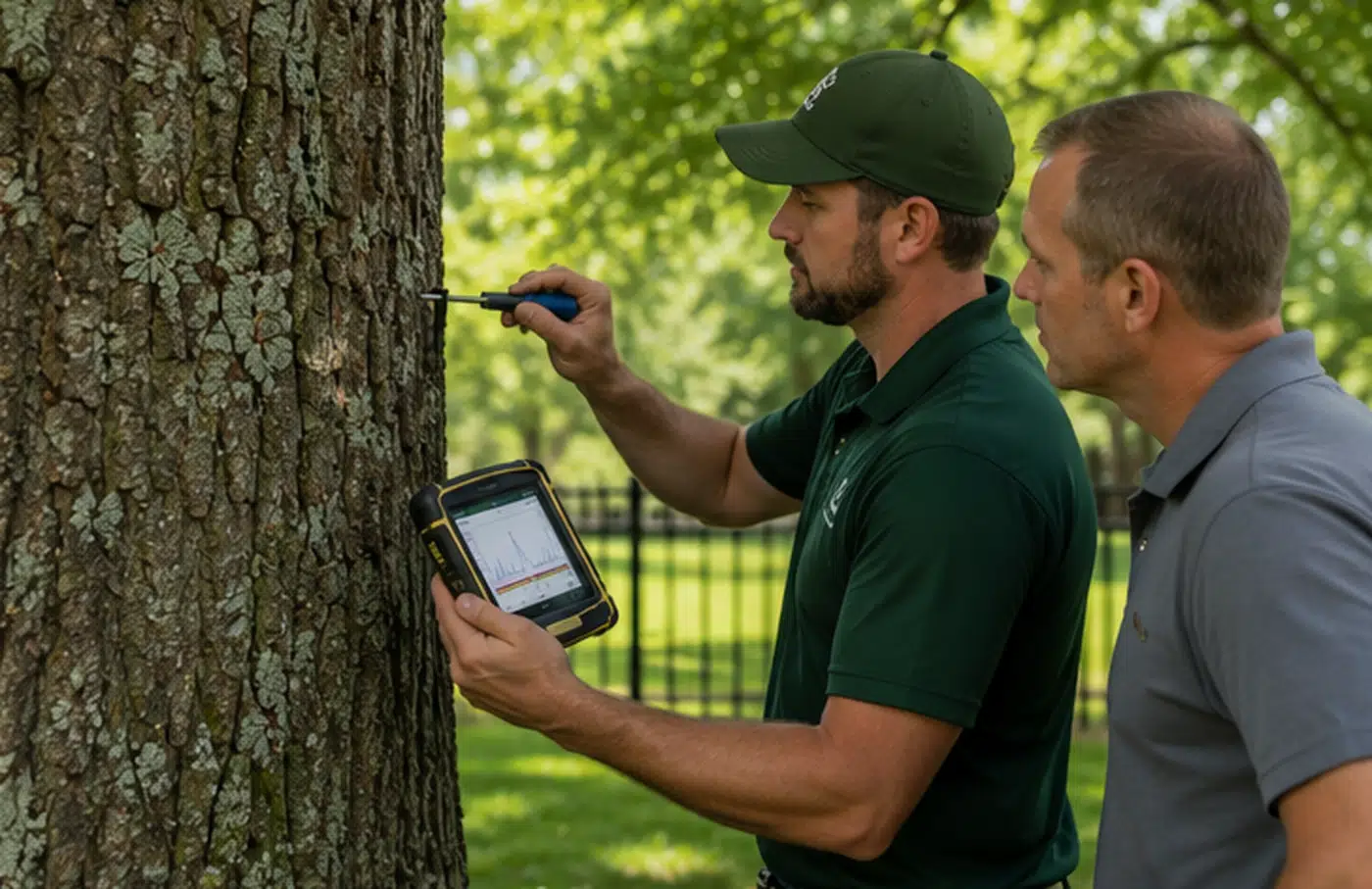
Helpful Structural Tree Care Topics
Weak unions and heavy limbs often overlap with pruning, tree health, storm damage, and removal decisions. These resources explain when structural support may make sense and when it may not.
When Tree Cabling and Bracing Can Help Preserve a Mature Tree
7 Signs a Tree May Be Hazardous Before the Next Storm
When Is Removal Safer Than Cabling?
Cabling cannot make every tree safe. Extensive decay, severe splitting, major root failure, or multiple serious defects may make removal the safer choice.
Can Pruning Reduce Structural Stress?
In some situations, selective pruning can reduce deadwood or excessive end weight and lower stress on a vulnerable part of the tree.
Storm Damage or Immediate Hazard?
If a tree has recently split, dropped a large limb, or is creating an immediate hazard, emergency tree service may be needed before a long-term support plan can be considered.
Tree Cabling and Bracing FAQs
Have questions about tree cabling and bracing in Charleston, WV? Here are answers to common questions from local property owners.
The tree’s condition, the parts needing support, access and the proposed hardware affect the scope. Ask whether the quote includes any associated pruning and subsequent inspections. Compare proposals for the same tree and objective; a support-system price should not be treated as a promise that the tree cannot fail.
Keep clear of new splits, hanging limbs or a changed lean, and do not climb or adjust the hardware. Call about emergency tree service when there is an immediate hazard. Once urgent concerns are addressed, discuss an inspection of both the tree and the support system rather than assuming the old installation remains suitable.
Yes. Request a tree inspection and health assessment and explain that you would prefer to retain the tree where reasonable. Share earlier storm damage, previous pruning and existing hardware. We discuss the observed condition, options and limitations before a support or removal scope is agreed.
Tree cabling and bracing use support hardware to help reduce movement or reinforce vulnerable sections of certain trees. They are generally considered when a mature tree has a structural weakness but may still be a reasonable candidate for preservation.
Sometimes, but not always. The answer depends on the severity of the split, decay, root condition, tree species, canopy weight, and what could be damaged if the tree failed. Severely compromised trees may still need removal.
It may. Selective pruning can sometimes reduce end weight, deadwood, or storm-damaged growth and may be recommended together with a support system.
There is no single replacement schedule that fits every tree and support system. The tree keeps growing and its condition can change. Arrange follow-up tree inspections at the interval recommended for the installation, and report new storm damage or visible changes. Ask whether monitoring is included in the original estimate; do not adjust the hardware yourself.
Not in every case. Cabling is a preservation option for selected trees, not a substitute for removal when a tree has severe decay, root failure, extensive splitting, or other defects that make preservation unreasonable.
Yes. Patriot Tree Experts provides tree cabling and bracing evaluations in Charleston, WV and nearby communities. Call to schedule an evaluation for a tree with structural concerns.
Schedule a Cabling and Bracing Evaluation in Charleston, WV
If a mature tree has a weak union, visible split, heavy limb, storm damage, or another structural concern, Patriot Tree Experts can evaluate the tree and explain whether cabling and bracing, pruning, monitoring, or removal is the most practical option. Call today to schedule an evaluation in Charleston, WV.