
Tree Trimming Services in Charleston, WV
Patriot Tree Experts provides professional tree trimming and pruning in Charleston, WV and nearby Kanawha County communities. From removing hazardous limbs to improving clearance, airflow, structure, and curb appeal, our veteran-owned team helps keep your trees safer, healthier, and better maintained.
🎖️ Veteran-Owned & Operated
🌳 Licensed & Insured Tree Service
🚨 Emergency Tree Service
🪚Located in Charleston, WV
Professional Tree Trimming in Charleston WV
Overgrown limbs, dead branches, crowded canopies, and low-hanging limbs can create problems around homes, driveways, sidewalks, roofs, fences, and utility areas. Patriot Tree Experts provides tree trimming in Charleston, WV with a focus on safety, tree health, and careful property protection.
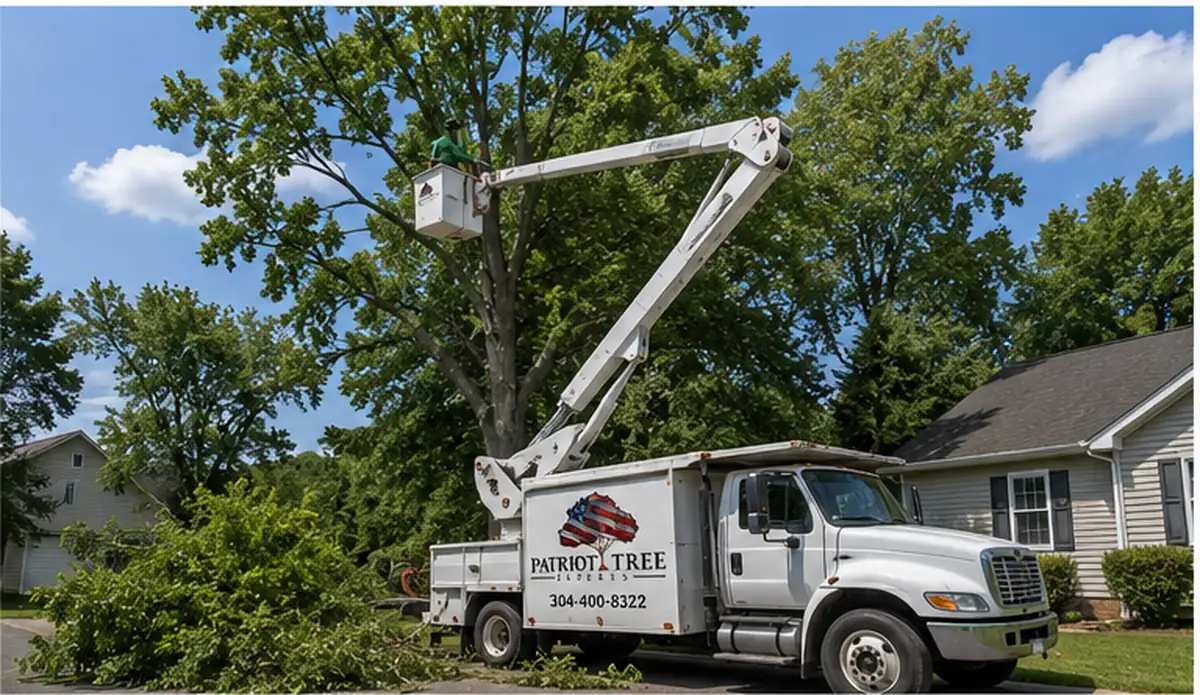
Most routine pruning does not require a crane. For selected heavy limbs over structures or complex storm damage, we can assess whether crane-assisted tree work is appropriate. That assessment also considers whether selective limb removal can address the concern while retaining the tree.
Pruning for roof and driveway clearance is different from removing dead branches or addressing selected heavy limbs. Tell us what needs protecting or clearing. We can discuss branch and limb removal or deadwood pruning while keeping the long-term condition of the tree in view. Our team evaluates the tree, the surrounding property, and the safest trimming approach before work begins.
Tree Trimming and Pruning Services We Provide
A tree-trimming estimate should identify the trees, the branches or clearance goals being addressed, and the cleanup included. Height, limb size, access for a lift or climber, and obstacles below the canopy affect the work. Compare those details when reviewing prices rather than assuming every quote covers the same pruning.
Tree Trimming & Pruning
Tree trimming and pruning help improve safety, clearance, structure, and appearance while supporting the long-term health of your trees. Patriot Tree Experts trims trees around homes, driveways, sidewalks, fences, and utility areas throughout Charleston and Kanawha County.
Our trimming and pruning service also covers Tree Trimming in South Charleston, Cross Lanes, Nitro, South Hills, Kanawha City, Mink Shoals, Pinch, and nearby areas.
Crown Reduction
Crown reduction shortens selected branches back to suitable lateral growth to reduce height, spread, or end weight. It is different from topping a tree to bare stubs. The amount removed depends on the species, condition, and reason for pruning.
Crown Thinning
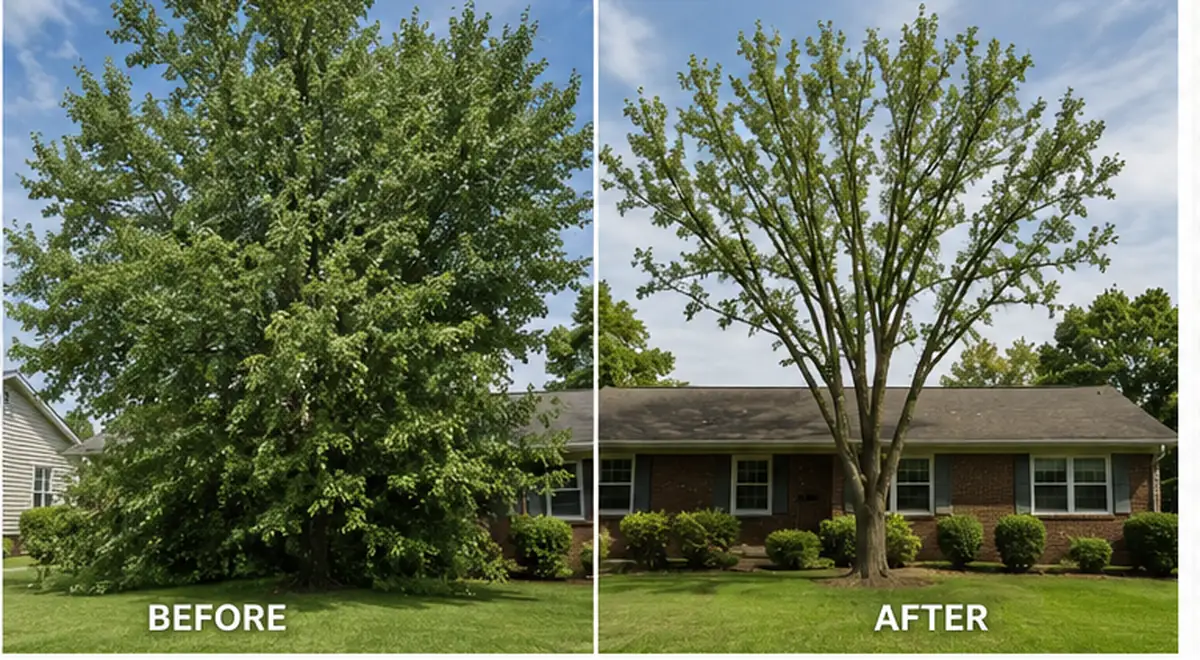
Crown thinning selectively removes branches to improve airflow, reduce weight, and allow more sunlight through the canopy without over-pruning the tree.
Deadwood pruning removes selected dead or broken branches; it does not by itself explain why branches died. When dieback is spreading or returning, discuss a tree-health assessment as well as pruning. The tree’s overall condition may change the recommendation.
Canopy Raising
Canopy raising removes lower limbs to improve clearance over yards, driveways, sidewalks, roads, and working areas.
Structural Pruning
Structural pruning helps improve branch spacing, reduce weak attachments, and support stronger long-term tree growth.
Hazard Pruning
Hazard pruning focuses on limbs that threaten homes, driveways, walkways, fences, vehicles, or nearby structures.
Clearance and Line Trimming
Clearance pruning addresses branches over roofs, gutters, driveways, sidewalks, and access routes. Trees near electrical lines require utility coordination, not ordinary yard trimming. Contact the power company before arranging work near its lines, and never attempt to move branches touching a wire.
Not Sure What Your Tree Needs?
Tell us what you want to address: branches against a roof, low limbs over a driveway, deadwood or a change in the tree’s appearance. Include the property address and access details when you request a pruning estimate. You do not need to choose a technical pruning method before our team evaluates the tree.
When Should You Trim Your Trees?
Late winter before spring growth is often suitable for routine pruning, but species and purpose matter. Spring-flowering trees may be pruned after flowering, and disease-sensitive trees may need a different schedule. Dead, broken, or hazardous limbs deserve prompt evaluation rather than waiting for a calendar date. Tell us about recent storm damage or changes in the tree when scheduling.
✓ Late winter to early spring is usually best for routine pruning
✓ Branches are touching your roof, siding, or gutters
✓ Limbs are hanging over your driveway, vehicles, or walkways
✓ Dead or broken branches are visible
✓ The canopy is too dense or heavy
✓ Trees were damaged by wind, rain, snow, or ice
✓ Limbs are blocking sunlight, visibility, driveways, or access areas
✓ Branches are growing toward fences, roads, or structures
✓ You want to improve curb appeal and tree shape
If you are not sure whether now is the right time to trim your tree, Patriot Tree Experts can inspect it and recommend the safest option based on the tree’s condition, season, and location on your property.
Our Tree Trimming Process
Review the pruning process below and see our tree trimming and lift-access project photos. The work plan should reflect the branches being addressed, nearby structures and access at your property.
1. Inspect the Tree and Property
We look at the tree’s health, structure, access, nearby hazards, and your goals for the property.
2. Recommend the Right Trimming Approach
We explain whether the tree needs crown reduction, crown thinning, deadwood removal, hazard pruning, clearance pruning, or another service.
3. Complete the Work Safely
We remove the agreed branches while considering the remaining canopy and nearby structures. Where a limb cannot fall freely, we plan controlled handling. The goal is the needed clearance or risk reduction, not stripping out healthy growth unnecessarily.
4. Clean Up the Work Area
We complete the cleanup included in your estimate. Confirm whether branches will be chipped and hauled or whether suitable wood should remain on site. Mention any older brush piles separately so the quoted cleanup is clear; land clearing and larger site cleanup are different from clearing the branches produced by a pruning job.
Helpful Tree Care Topics
Tree trimming is often connected to safety, structure, storm damage, and removal decisions. A new local guide covers tree trimming for roofs, roads and driveways in Teays Valley. New local guides include tree trimming and property clearance in Dunbar and tree trimming vs. removal in Nitro. These guides can help you decide when pruning may be enough and when a different service should be considered.
Tree Trimming vs. Tree Removal: How to Decide
7 Signs a Tree May Be Hazardous Before the Next Storm
Tree Trimming vs. Tree Removal
Some trees only need selective pruning, while others may be too damaged, dead, or hazardous to keep safely. If trimming will not solve the problem, tree removal may be the safer option. Read our tree trimming vs. tree removal guide.
What Happens After a Tree Is Removed?
If a tree has to be removed, stump grinding can help restore your yard, remove trip hazards, and clear the area for grass, landscaping, or future use.
Concerned About Tree Health?
Our arborist services help identify tree disease, pests, decay, stress, and structural concerns before they become bigger problems. Our tree inspection and health assessment service helps connect visible concerns with a practical pruning or care plan for your Charleston-area property.
Serving Charleston, Kanawha County, and Nearby Communities
Patriot Tree Experts serves Charleston and surrounding Kanawha County communities, plus nearby Putnam County service areas. Call us to confirm availability for your property.
Don’t see your area listed? Call Patriot Tree Experts to ask about tree service near you.

Tree Trimming FAQs
Have questions about tree trimming, pruning, timing, or cleanup? Here are answers to common questions from Charleston and Kanawha County property owners.
Identify each tree, the reason for pruning and the branches or clearance concerns to assess. Tree size, condition, access and handling material near structures all affect the scope. Ask whether chipping, hauling and final cleanup are included. Use the pruning estimate form to share the address and access details. For a job focused on one damaged or obstructing limb, see branch and limb removal.
Not automatically. The extent of deadwood, the remaining canopy and other visible defects need to be considered together. Deadwood removal addresses selected branches; it does not resolve every reason a tree may be declining. A tree inspection and health assessment can help clarify whether pruning, further care or removal should be discussed.
It depends on the tree species, age, health, location, and safety concerns. Many trees benefit from routine trimming every few years, while hazardous limbs, storm damage, dead branches, or clearance problems may need attention sooner. Patriot Tree Experts can inspect your tree and recommend the right trimming schedule for your property.
For many healthy trees, late winter to early spring is a good time for routine tree pruning because the tree is dormant and new growth has not started yet. Dead, broken, hazardous, or storm-damaged limbs can be removed whenever they become a safety concern.
Tree trimming often focuses on clearance, shape, and removing overgrowth around homes, driveways, sidewalks, fences, and access areas. Tree pruning is more focused on tree health, structure, deadwood removal, and long-term growth. In many tree care jobs, trimming and pruning are both part of the same service.
Proper tree trimming can reduce deadwood, excessive weight, weak limbs, and crowded branches, which may lower the risk of limb failure during storms. It cannot prevent all storm damage, but it can reduce certain hazards and help make trees safer around homes and nearby structures.
Yes. Tell us whether branches are touching the roof, obstructing vehicles or affecting another structure. Our roof and driveway clearance guide explains common concerns. Mention narrow gates and access restrictions; electrical-line concerns require utility coordination. We evaluate the tree and surrounding property before work begins so the job can be completed safely.
Yes, when included in the agreed estimate. We discuss branch chipping, hauling, and any wood you would like to keep before work starts. Confirm those items when comparing quotes so you know what will remain on the property.
Call about emergency tree-service availability for a hanging limb, split tree or blocked access rather than waiting for an online-form reply. Keep clear of the affected area and report involved power lines to the utility. Once immediate hazards are assessed, we can discuss storm debris cleanup and any separate pruning or hauling work. Scheduling depends on conditions and crew availability.
Every pruning cut creates a wound, so the reason for each cut matters. Appropriate pruning can improve clearance and structure, but poor cuts, topping, or removing too much live canopy can cause lasting harm. We assess the tree before recommending how much to remove; a stressed tree may need a more limited approach.
Crown reduction is a pruning method used to reduce the height or spread of a tree when limbs are growing too close to roofs, structures, roads, or access areas. The goal is to reduce size and risk while keeping the tree’s natural shape as much as possible.
Crown thinning selectively removes branches from the canopy to improve airflow, reduce weight, and allow more sunlight through the tree. It can help reduce overcrowding without removing too much of the tree’s natural structure.
Need a focused pruning service? Explore Branch Removal in Charleston WV for selected damaged or obstructing limbs, or Deadwood Pruning for dead and dying branches.
Schedule Tree Trimming in Charleston, WV
Whether you need routine trimming, hazardous limb removal, crown reduction, deadwood removal, clearance pruning, or storm-related tree work, Patriot Tree Experts is ready to help. Call today or request a free estimate online.