When a tree starts causing problems, the decision is not always “keep it” or “cut it down.” In many cases, tree trimming or pruning can improve clearance, remove deadwood, reduce certain hazards, and preserve a healthy tree. In other situations, the tree may be too damaged, unstable, dead, or poorly located for pruning to solve the underlying problem.
When Tree Trimming May Be Enough
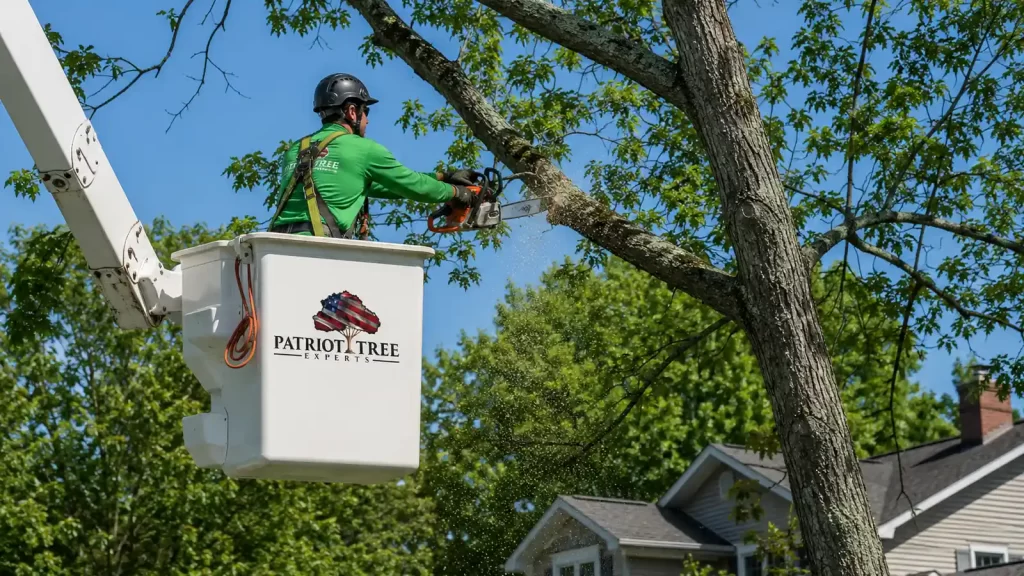
Tree trimming and pruning may be appropriate when the main concern is dead branches, roof or driveway clearance, storm-damaged limbs, overextended growth, crossing branches, or a need to reduce weight in selected parts of the canopy.
The Tree Is Generally Healthy
If the trunk, roots, and major structure are sound, selective pruning may solve the immediate problem while preserving the tree.
The Hazard Is Limited to Specific Limbs
A broken branch over a driveway or deadwood over a yard does not automatically mean the whole tree should be removed. Targeted pruning can often address the specific risk.
You Need More Clearance
Branches growing toward roofs, siding, gutters, driveways, sidewalks, roads, or fences can often be managed with proper pruning rather than removal.
The Tree Has a Manageable Structural Concern
Some mature trees with weak unions or heavy limbs may be candidates for pruning combined with cabling and bracing. The right approach depends on the tree’s condition and the severity of the defect.
When Tree Removal May Be the Better Option
Tree removal may be the more practical choice when the tree has severe decay, major root failure, extensive storm damage, serious splitting, widespread canopy death, or a location that creates an unacceptable risk to people or property.
The Tree Is Dead or Declining Severely
A tree with extensive dieback, major decay, or very little healthy canopy may continue to lose structural strength even if some branches are removed.
The Root System Is Failing
New leaning, soil lifting around the base, large root damage, or movement after storms can indicate a problem that pruning alone cannot correct.
There Are Multiple Serious Defects
A tree with a split trunk, decay, root problems, and large dead limbs may have several risks working together. In that situation, removing one branch may not meaningfully reduce the overall hazard.
The Tree Is in a Bad Location
Sometimes a tree has simply outgrown the available space. If repeated heavy pruning would be required to keep it away from a structure, road, or access area, removal may be more practical than ongoing aggressive cutting.
Can Pruning Make a Dangerous Tree Safe?
Sometimes it can reduce the risk, but not always. The answer depends on what is actually wrong with the tree. Removing deadwood can reduce the chance of falling branches, but it cannot repair severe trunk decay or restore a failing root system.
What About a Tree That Was Damaged in a Storm?
Storm damage can range from a few broken limbs to major structural failure. Fresh cracks, split leaders, root movement, or large hanging branches should be evaluated carefully. If there is an immediate hazard, our emergency tree service may be the right starting point.
How Do You Decide?
The best decision comes from looking at the entire tree and the property around it. Tree condition, structure, roots, species, location, nearby structures, access, and what could be damaged if a failure occurs all matter.
If you are not sure which service you need, Patriot Tree Experts can evaluate the situation and explain whether trimming, support, plant health care, monitoring, or removal is the more practical next step.
Tree Trimming and Removal in Charleston, WV
Patriot Tree Experts provides tree trimming and tree removal throughout Charleston and nearby communities. We are veteran-owned, fully insured, and carry workers’ compensation coverage for our crew.
Call (304) 400-8322 or request an estimate to discuss the tree and property.