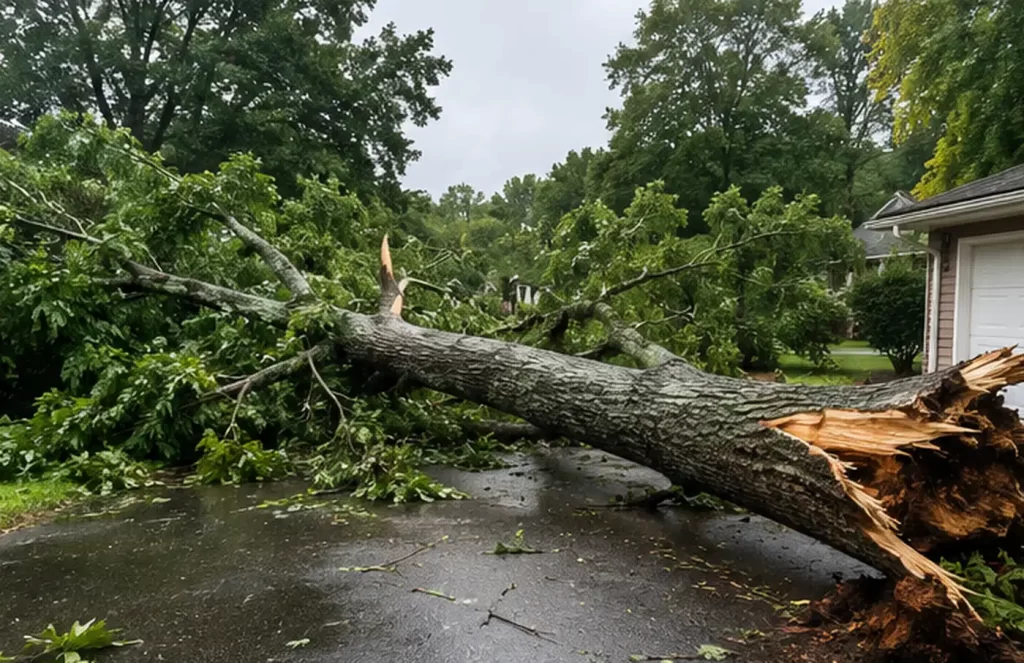
A fallen tree can turn into an emergency quickly when it lands on a roof, blocks a driveway, damages a fence, or traps vehicles and people behind an access route. The first priority is not cutting the tree up as fast as possible. It is making sure people stay out of danger and that the situation is evaluated before anyone starts moving wood under tension.
1. Keep People Away From the Tree
Do not walk under hanging limbs or climb onto a damaged roof to inspect the tree. Broken trees can shift, roll, split, or release stored tension without warning. Keep children, pets, vehicles, and bystanders away from the affected area.
2. Watch for Utility Hazards
If the tree is touching or near power lines, service lines, a transformer, or electrical equipment, stay back and contact the appropriate utility or emergency service. Do not assume a downed line is safe because it is not sparking.
3. Photograph the Damage From a Safe Location
If it is safe to do so, take photos of the tree, the damaged structure, the surrounding area, and any visible property damage before cleanup begins. These images may be useful for your insurance company or property records.
4. Call an Emergency Tree Service
When a tree has fallen on a structure, blocked a driveway, split, or left large hanging limbs, a professional emergency tree service can evaluate the safest way to stabilize and remove the material.
Storm-damaged trees are often more difficult than routine removals because broken trunks and limbs can be loaded, twisted, suspended, or supported by other parts of the tree.
5. Do Not Cut Loaded or Suspended Limbs Yourself
A branch under tension can move violently when cut. Logs resting against a structure can also roll or shift once their support changes. Even experienced saw users can be injured when storm-damaged wood behaves unpredictably.
If the Tree Is on Your House
Stay out of rooms directly beneath the damaged area if there is any concern about structural movement, roof damage, falling limbs, or water intrusion. If the building appears unsafe, leave the area and contact the appropriate emergency or utility service before tree work begins.
Once the site is safe enough to work, the tree may need to be removed in controlled sections to avoid causing additional damage to the roof, siding, gutters, windows, deck, or nearby structures.
If the Tree Blocks Your Driveway
A blocked driveway can become especially urgent when it is the only access to the home. The safest approach depends on whether the tree is fully on the ground, suspended, leaning, tangled with other trees, or near utility lines.
Let the tree company know that access is blocked when you call. That helps the crew understand the urgency and the type of equipment that may be needed.
Will Homeowners Insurance Pay for Tree Removal?
Coverage varies by policy and by what the tree damaged. Your insurance company is the right source for questions about your specific coverage, deductible, documentation, and whether tree removal or structural repairs are covered. We can provide tree-service documentation for the work we perform when needed.
What Happens After the Emergency Is Stabilized?
After the immediate hazard is removed, there may still be cleanup, stump work, pruning of damaged neighboring trees, or an evaluation of other trees that were affected by the same storm.
If the tree was completely removed, stump grinding may be scheduled separately. If nearby trees lost large limbs or changed significantly during the storm, tree trimming or a tree-health evaluation may be appropriate.
Emergency Tree Service in Charleston, WV
Patriot Tree Experts provides emergency tree service throughout Charleston and nearby communities. We are veteran-owned, fully insured, and carry workers’ compensation coverage for our crew.
If a tree has fallen, split, blocked access, or created an immediate hazard, call (304) 400-8322. For non-emergency work, you can also request an estimate online.